
VHFVery high frequency
- Strong at
- Open field, long sightlines, section-to-section
- Weaker at
- Bins, steel buildings, tight yards
Most grain and field operations start here.
Radios & antennas
We sell Icom because it survives the cab. Every radio leaves our shop already set to the channels you run, and we fit the mobiles and antennas ourselves, so you are not reading a manual at 6 a.m. in a field.
Quick note on the words. A two-way radio is voice between two people, radio to radio, and every radio on this page is one. That is different from a 2-way remote start, where the vehicle sends a confirmation back to your key fob. Same phrase, two completely different products.
First decision
This is the question that trips people up, and the wrong answer means radios that do not reach. The short version: VHF carries further across open ground, UHF gets through buildings and steel better.
Most grain and field operations start here.
Better when the work happens around buildings.
Most operations end up mixing both. Tell us where you actually work and what your neighbours run, and we will spec it so everything talks to everything.
The lineup
Two handhelds you carry, and two mobiles that mount in the cab and run off vehicle power. Prices are per radio, before installation.
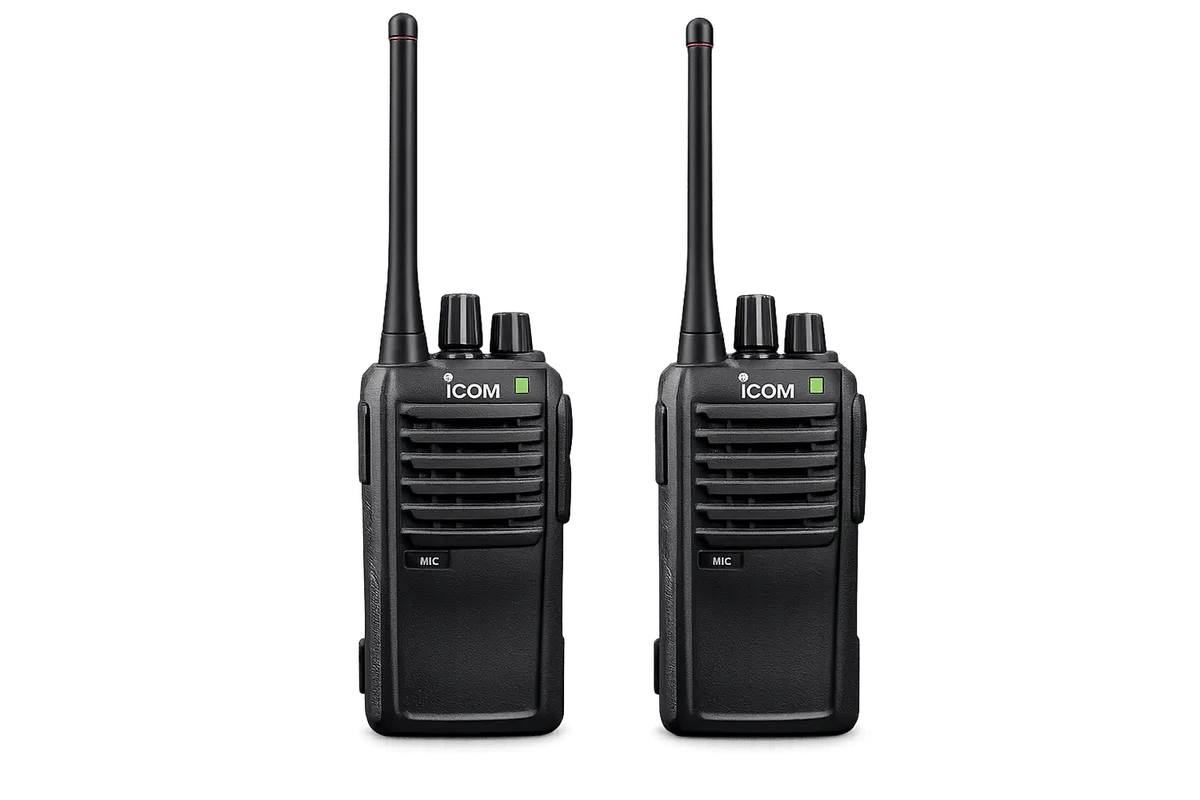 Handheld
 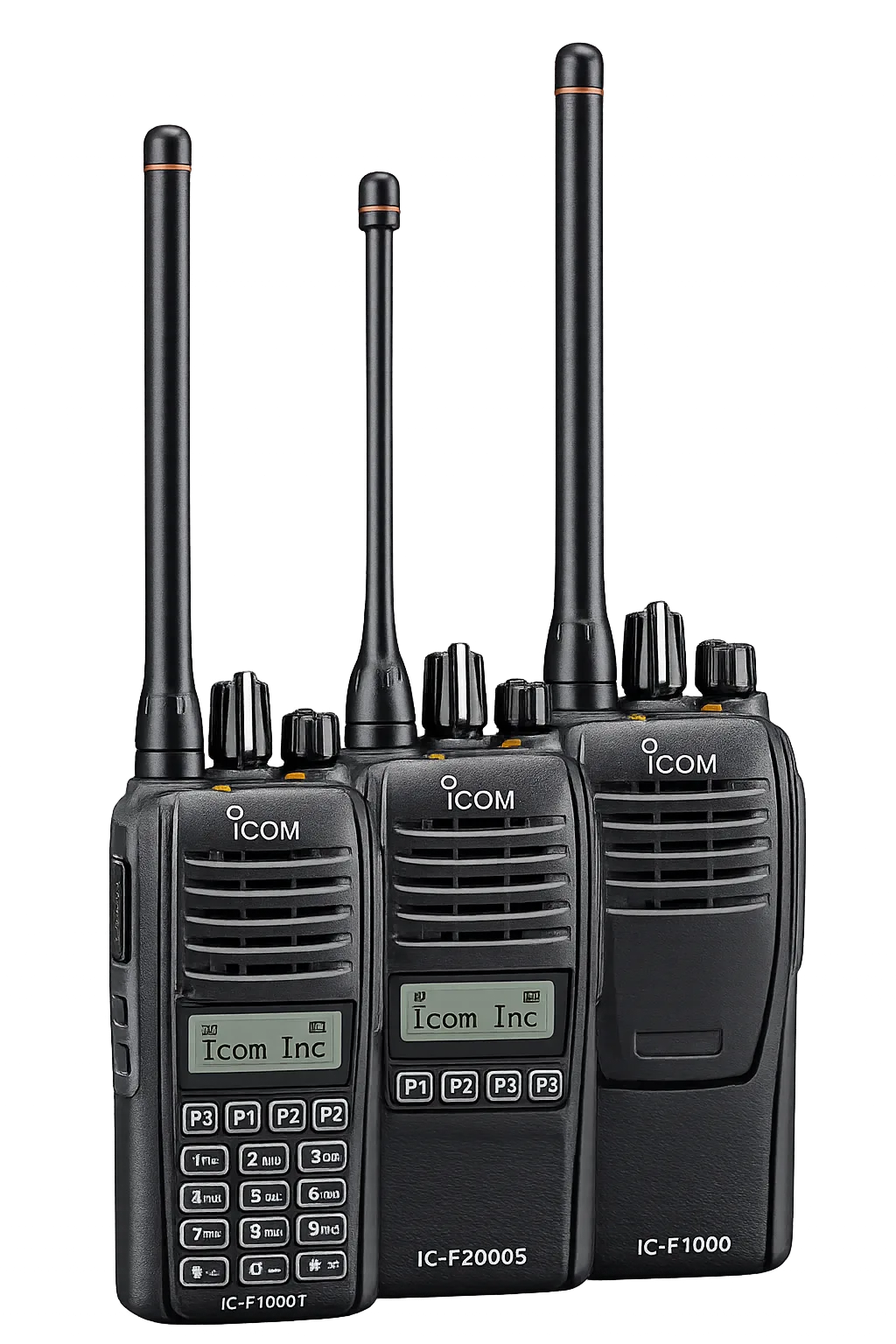 Handheld
 A step up from the F3003.
Lone workers · Multiple channels or zones
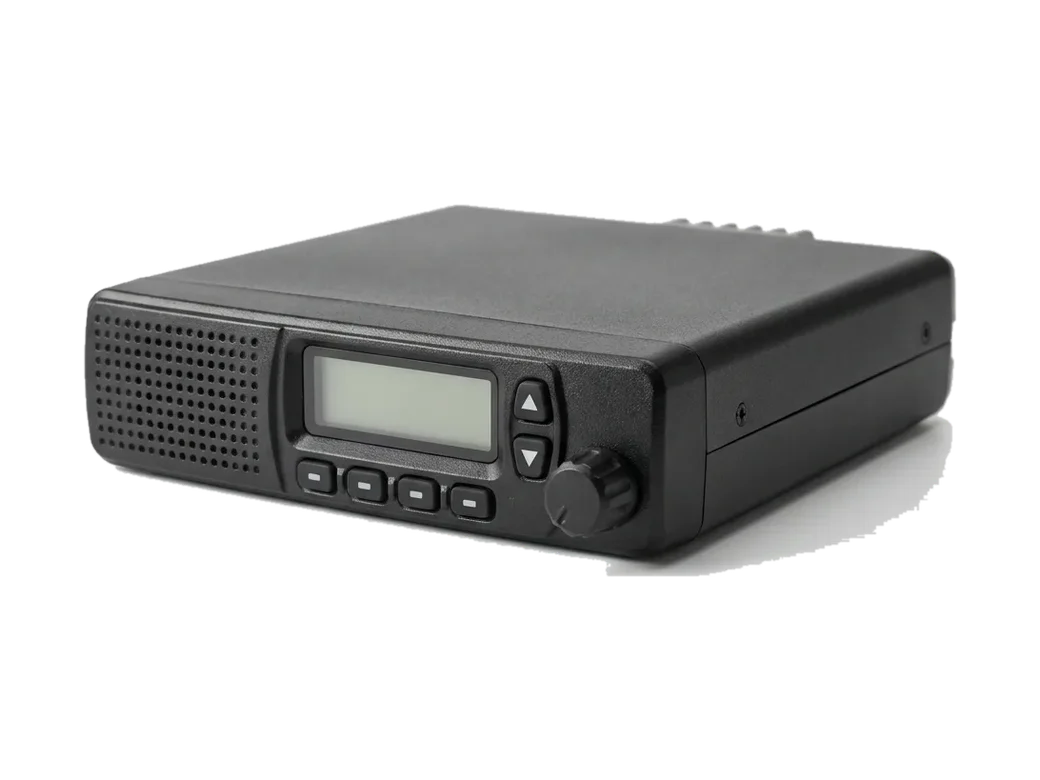 Mobile
 The full-size in-cab mobile.
Tractor, combine and truck cabs · Running named channels
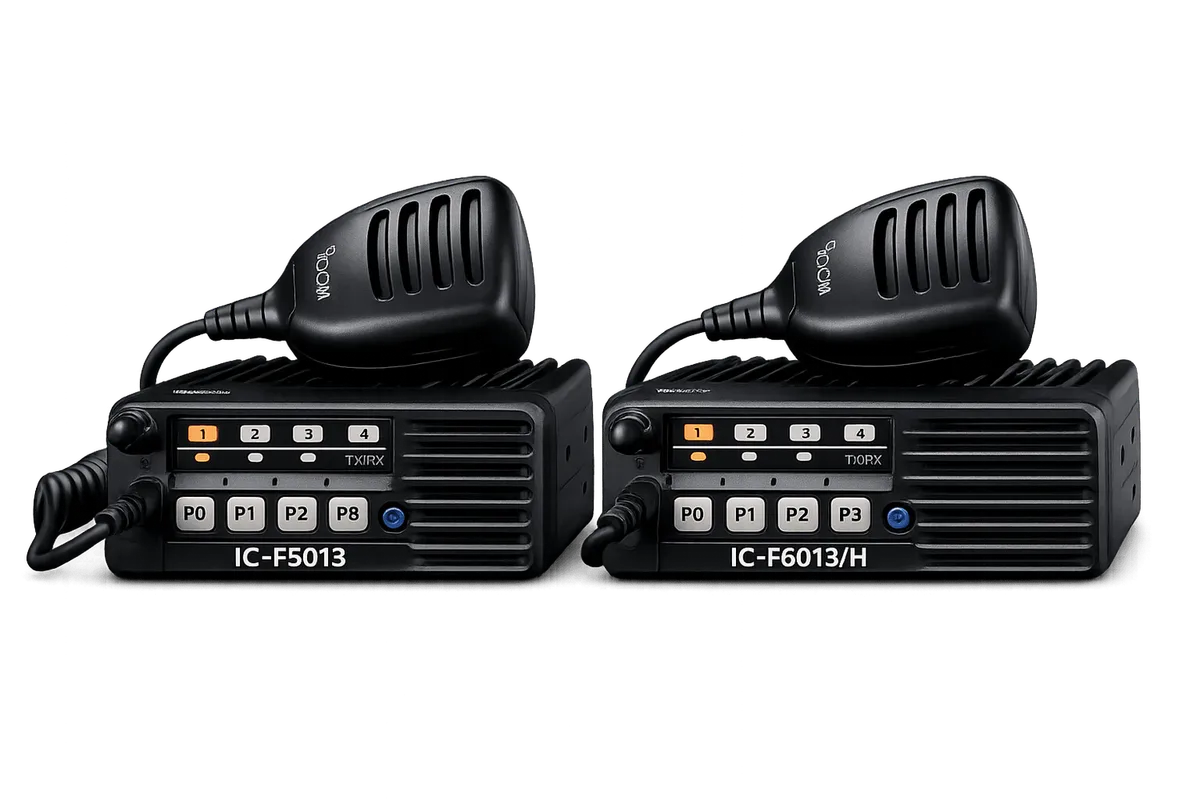 Mobile
 The simple mobile.
Tractor and combine cabs · Base station in the shop
Installation
A handheld works out of the box. An in-cab mobile does not. It has to be mounted, wired to vehicle power, and given a proper external antenna, and that antenna will do more for your range than the radio itself will. It is also the part people most often get wrong doing it themselves.
Questions
They are unrelated, and the wording is genuinely confusing. A two-way radio is voice between two people, radio to radio, and every radio we sell is one. A 2-way remote start is a key fob that gets a confirmation back from your vehicle after it starts, which is the difference between the PRO 1WG15 and the PRO 2WG15. One is communication, the other is a confirmation.
Yes, and that is most of what we do on the radio side. A handheld works out of the box, but an in-cab mobile needs to be mounted, wired to vehicle power, and given a proper external antenna to be worth the money. We do the mount, the wiring, and the antenna, in trucks, tractors, combines, and the shop.
On a mobile radio the antenna does more for your range than the radio does. A good antenna, mounted in the right spot with a clean ground, is the difference between reaching the next quarter and reaching the far end of the section. It is also the part people most often get wrong when they install it themselves.
Yes. We recommend VHF or UHF based on where you use the radios, how much ground you need to cover, and what your neighbours or crew already run. As a rough rule, VHF carries further across open field, UHF handles buildings, bins, and yards better. We also handle setup and programming so the radios arrive ready to use.
Yes. We program every radio before it leaves the shop so it matches the channels you already run. If you are starting fresh, we will set up a sensible channel plan with you.
Usually. Icom gear programs to standard analog frequencies, so it will normally talk to whatever is already in your trucks. Tell us what you are running now and we will confirm before you buy.
It depends on the frequencies you use. Some are licence-free, others need a radio licence from ISED Canada. We will tell you straight which category your setup falls into so there are no surprises.
How much ground you cover, how many handsets you need, and what radios are already in the trucks. We will spec it and quote it.